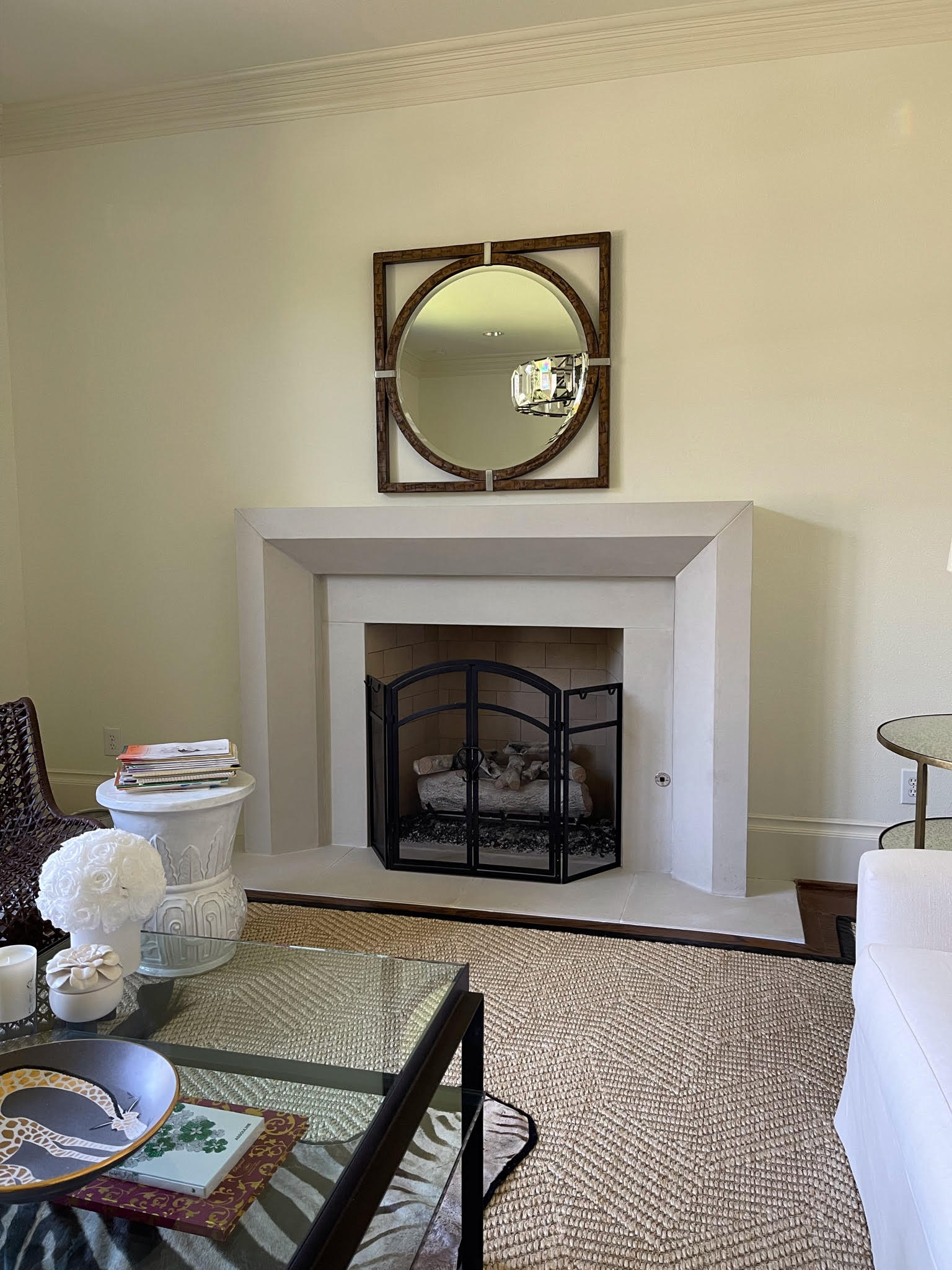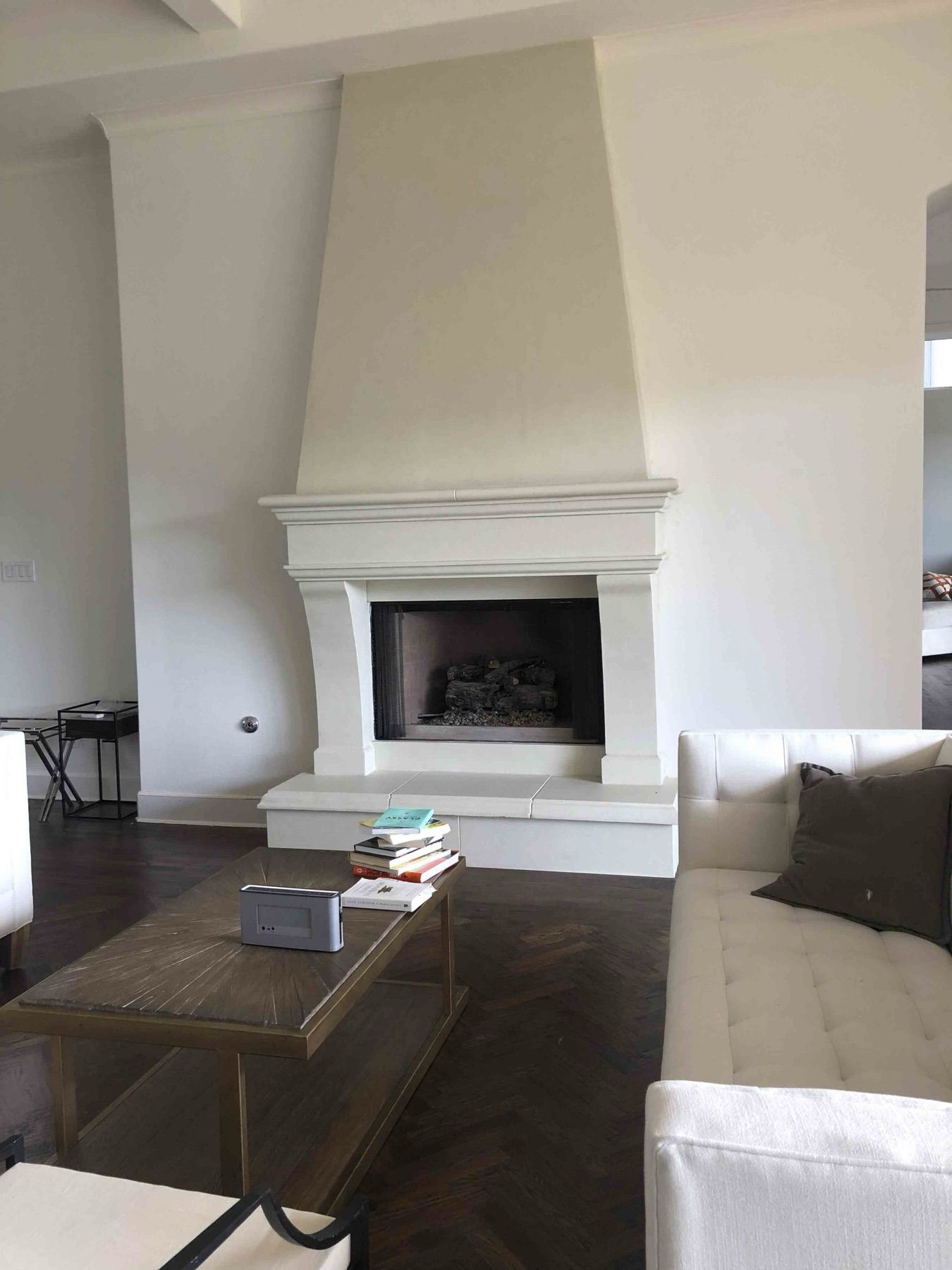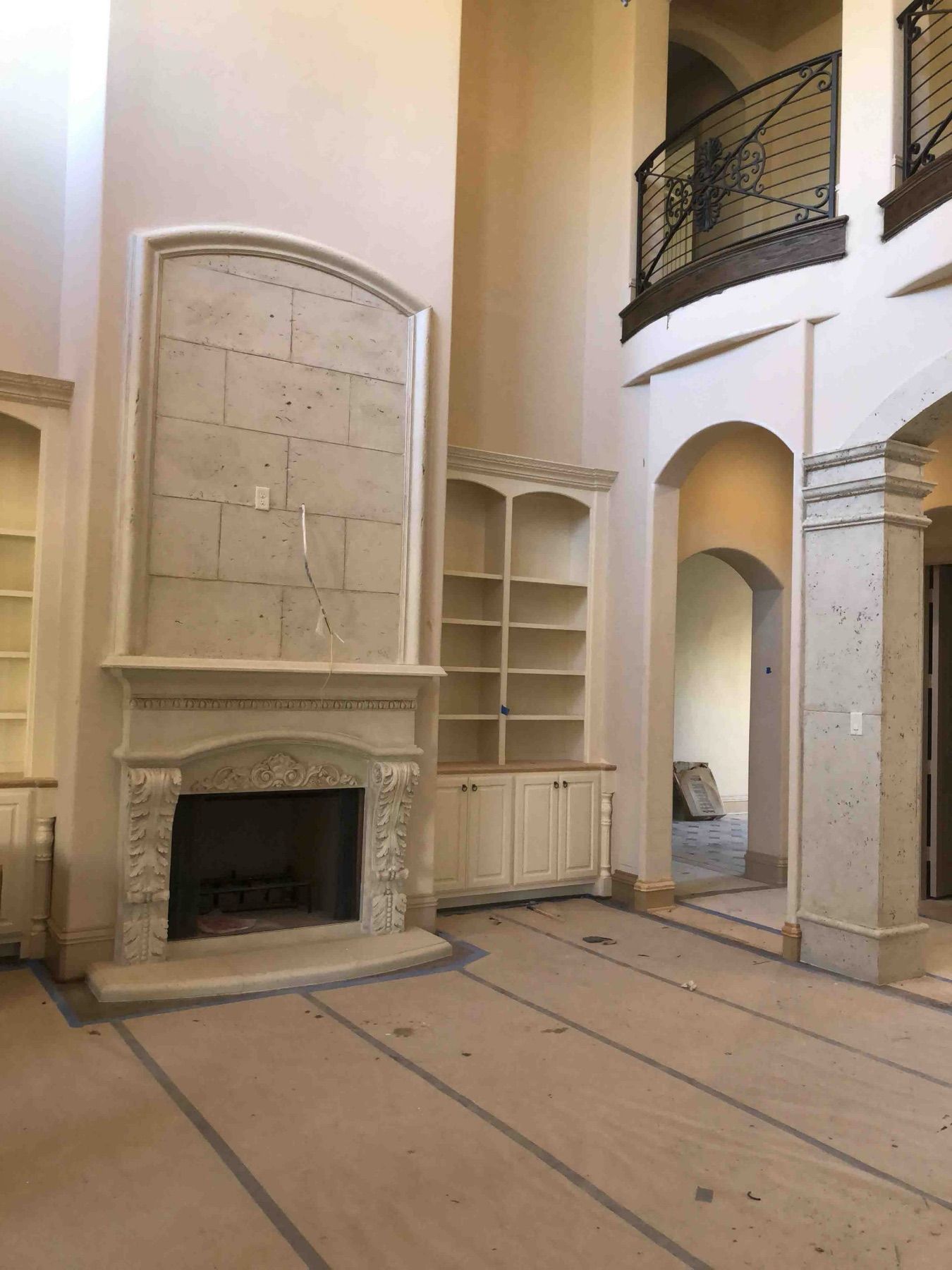

What is Cast Stone?
Cast stone is a refined architectural precast concrete designed to simulate natural cut stone. Made from a mixture of natural stone aggregates, cement, and coloring agents poured into molds, cast stone delivers the beauty and elegance of natural stone while offering additional advantages in terms of cost, weight, and versatility.
Durability and Longevity
Cast stone is exceptionally durable, particularly in fireplace applications. It resists heat, moisture, and the kind of environmental wear that causes other materials to degrade over time.
Heat Resistance
Unlike wood or certain synthetic materials, cast stone can withstand the high temperatures generated by a fireplace without cracking, warping, or deteriorating over time.
Low Maintenance
Unlike wood, which requires regular painting, sealing, or staining, cast stone mantels require minimal upkeep. A simple wipe-down with a damp cloth is usually all it takes to keep a cast stone mantel looking its best for years.
Aesthetic Versatility
One of cast stone's greatest strengths is its ability to be molded into virtually any shape and finished to mimic a wide range of natural materials.
Wide Range of Finishes
Cast stone can replicate the look of limestone, travertine, sandstone, and even marble, giving homeowners the ability to match virtually any interior design style.
Customization Options
Whether you want intricate carvings, classical columns, or a sleek, modern profile, cast stone can be custom-crafted to meet your exact specifications—something that's much harder to achieve with natural stone.
Cost-Effectiveness
Cast stone consistently delivers a better value proposition than natural stone, especially when you factor in both material and installation costs.
Lower Material Costs
Manufacturing cast stone is far more efficient than quarrying natural stone, which translates to significantly lower material costs.
Reduced Installation Costs
Cast stone is lighter than natural stone, which means it's easier to handle and typically requires less structural reinforcement. This can translate to lower labor costs and faster installation timelines.
Cast Stone vs. Wood Mantels
Wood mantels are combustible, which presents a genuine safety concern near open flames. Cast stone is completely non-combustible, making it a safer choice for fireplace surrounds. Wood is also susceptible to warping, cracking, and insect damage over time—none of which are concerns with cast stone.
Cast Stone vs. Metal Mantels
Metal mantels can work well in industrial or ultra-modern settings, but they lack the warmth and design versatility of cast stone. Metal also conducts heat efficiently, which means the surface can become uncomfortably hot during use—a concern that doesn't apply to cast stone.
Cast Stone vs. Natural Stone Mantels
Natural stone is beautiful, but it's heavy, expensive, and requires skilled labor to install properly. Cast stone delivers the same aesthetic appeal at a fraction of the cost, with lighter weight that simplifies installation considerably. The visual result is virtually indistinguishable to the untrained eye.
Conclusion
When it comes to fireplace mantels, cast stone offers the ideal combination of beauty, practicality, and value. Its durability, design versatility, cost-effectiveness, and environmental advantages make it a compelling choice for homeowners across the design spectrum—whether you're drawn to classic elegance or contemporary minimalism.