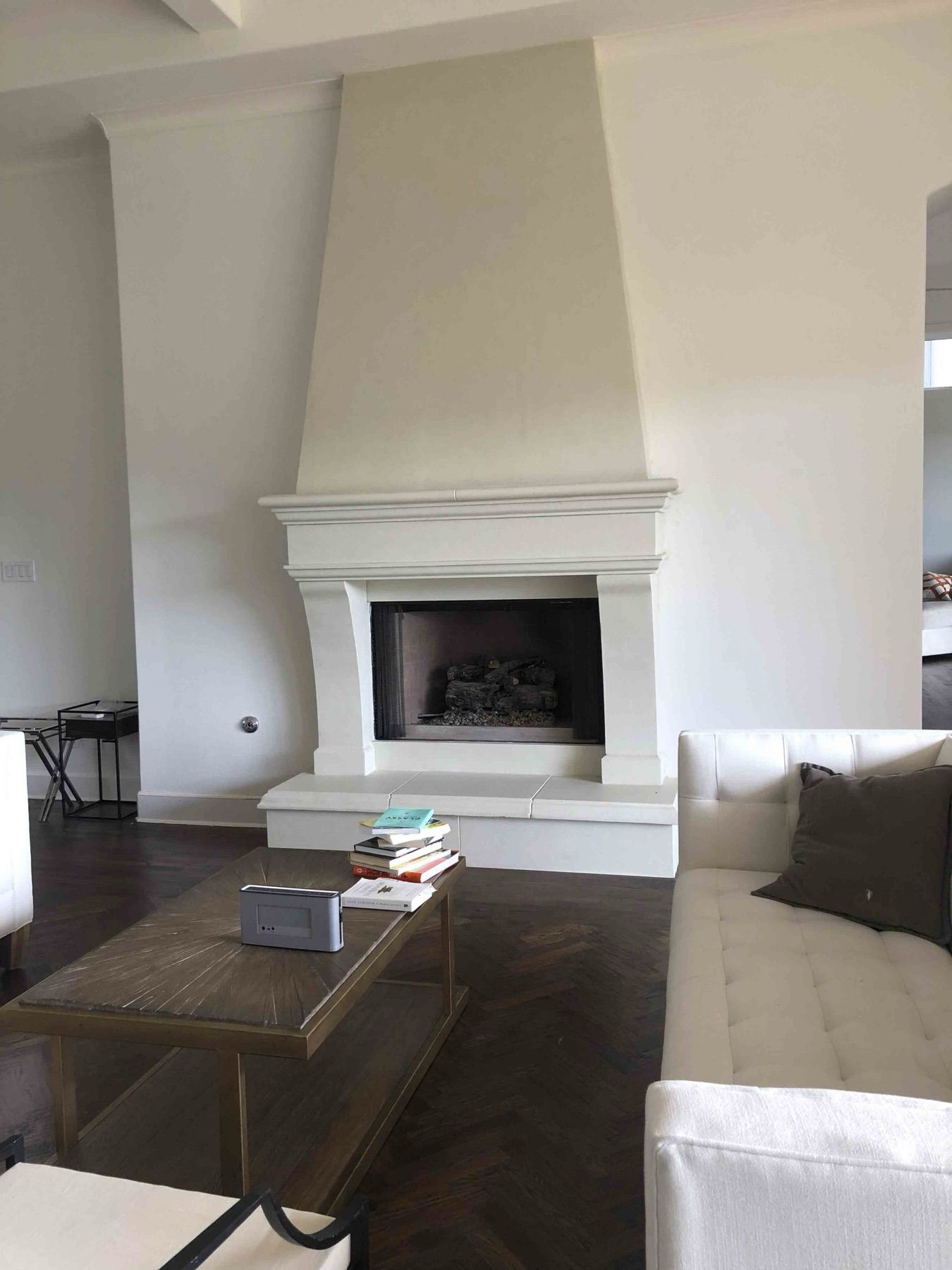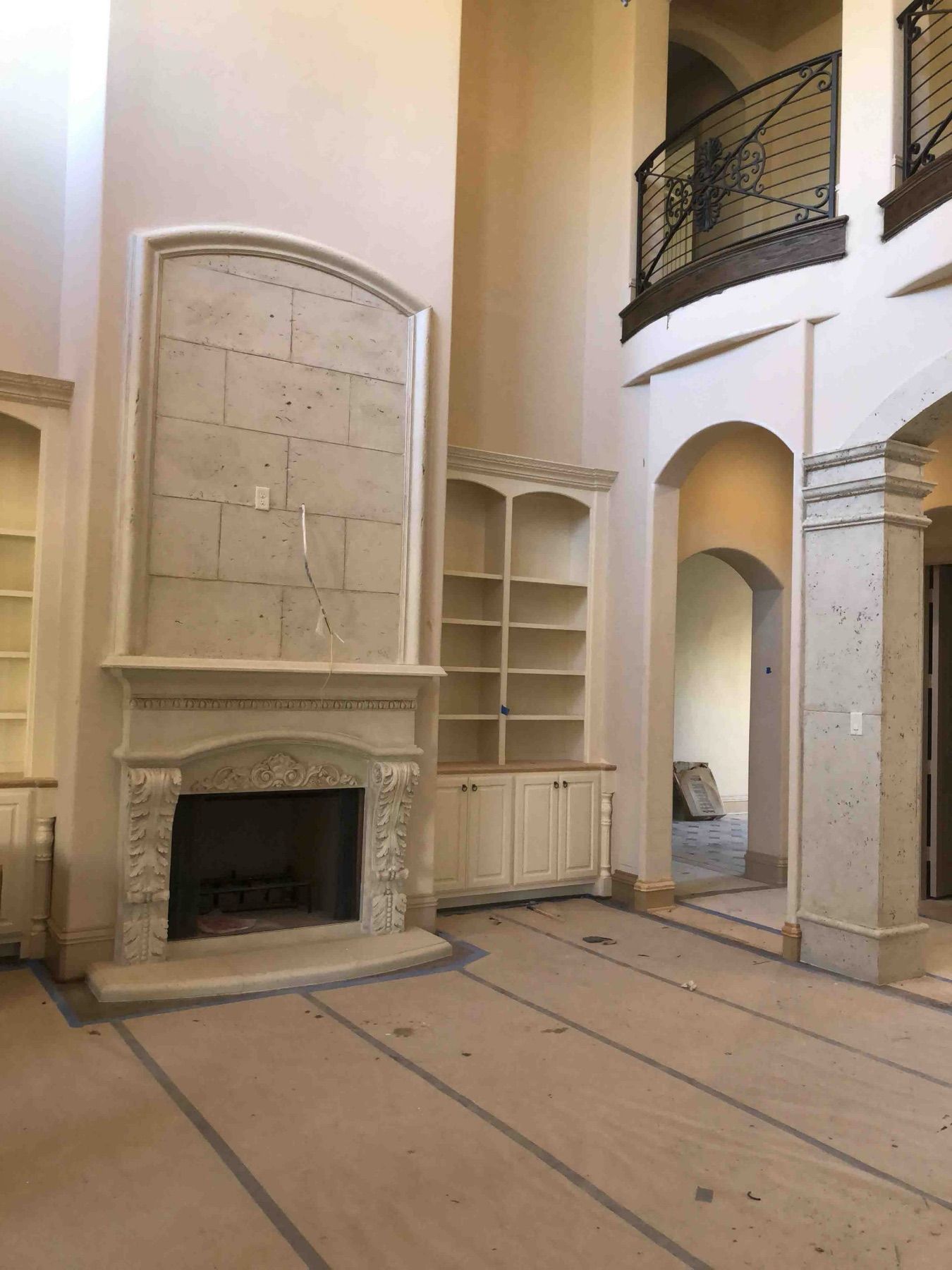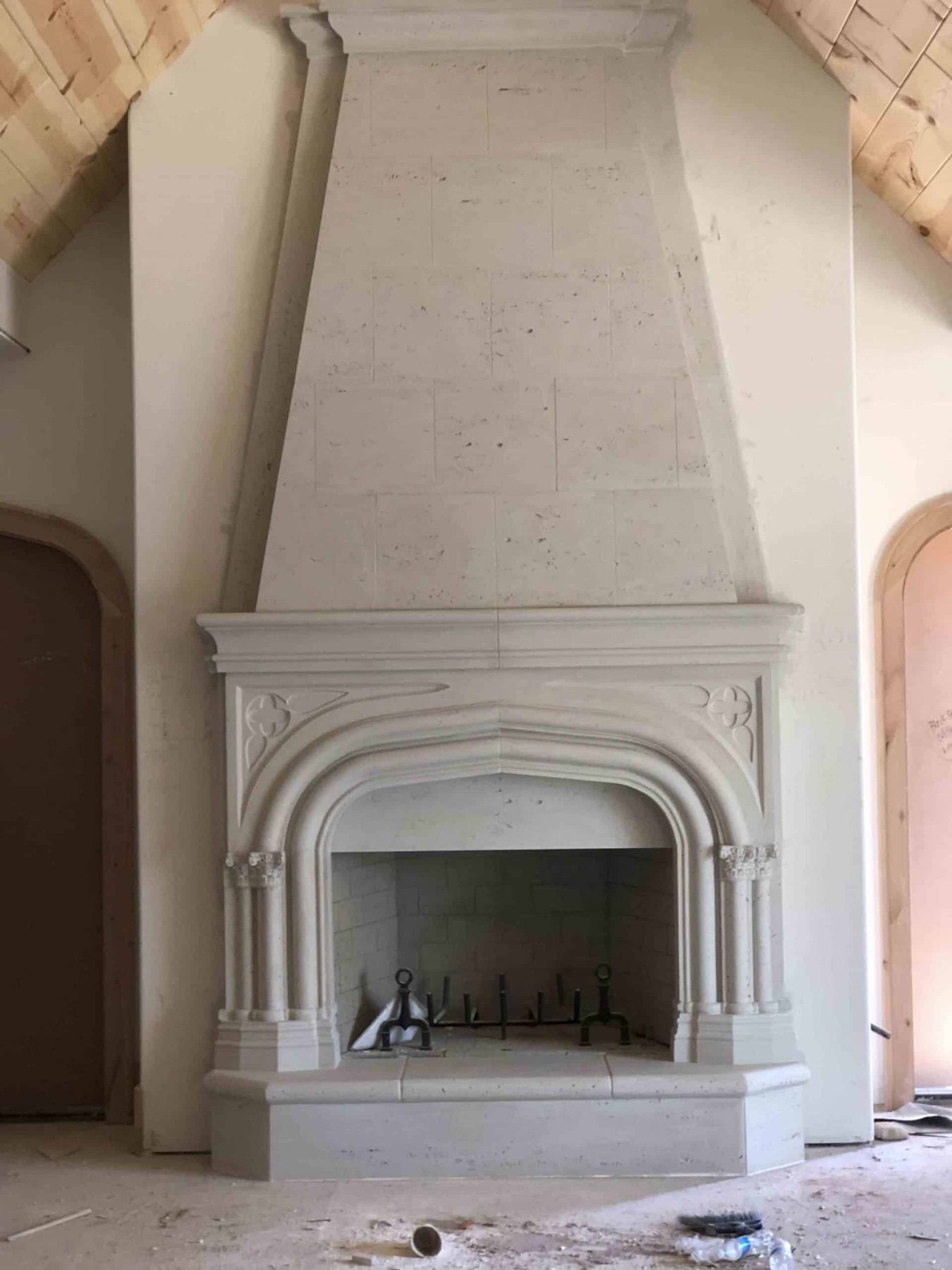
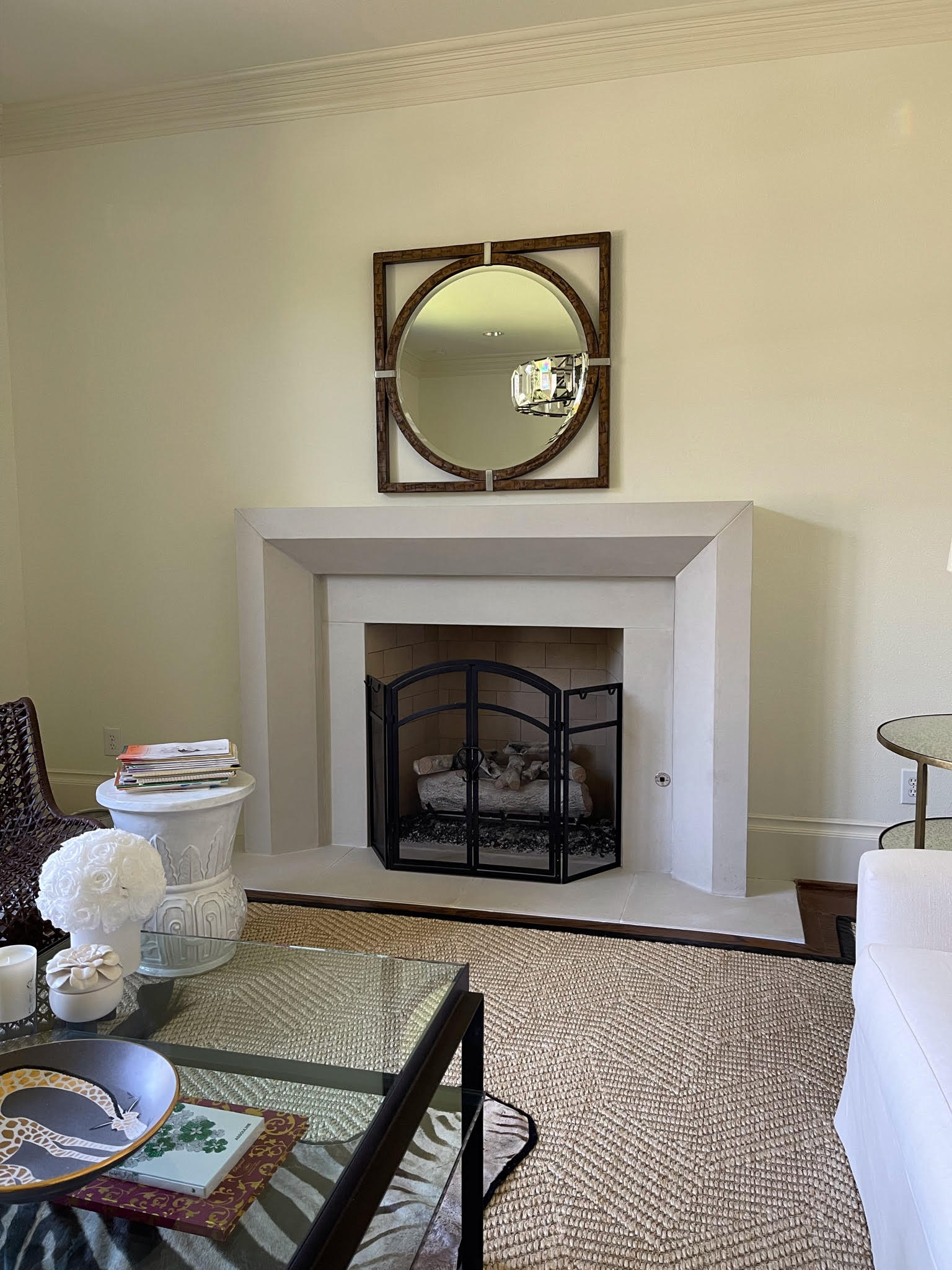
When homeowners start planning a fireplace surround, entryway, or exterior architectural detail, the conversation almost always comes down to two materials: cast stone and natural stone. Both can deliver the look of carved limestone or hand-finished masonry, and at a glance, a well-made piece of either can be hard to tell apart. But the two materials are built differently, priced differently, and behave differently once they're installed — and those differences matter more than the visual similarities.
If you're weighing the two for a mantel, a fireplace surround, or an exterior element like a column or window surround, here's what actually separates them.
What Each Material Actually Is
Natural stone is quarried directly from the earth — limestone, marble, granite, and travertine are the varieties most commonly used around fireplaces and entryways. Each block or slab is cut and shaped from raw material, which means every piece carries its own unique veining, color variation, and texture.
Cast stone, by contrast, is a manufactured product made from a fine aggregate and cement mixture that's poured into molds, cured, and finished to replicate the look of quarried stone. Because it's cast rather than carved, it can be shaped into a much wider range of profiles, and the same mold can reproduce identical detailing across multiple pieces.
Cost
This is usually the first question homeowners ask, and it's often the deciding one. Quarrying, cutting, and hand-carving natural stone is labor- and material-intensive, and pricing can vary widely depending on the stone type, where it's sourced, and how much custom carving a project requires. Cast stone is manufactured in a controlled process that uses far less raw material per finished piece, which generally makes it the more budget-friendly option for achieving a similar look — particularly on larger installations like a full fireplace surround or a set of matching exterior columns.
Weight and Installation
Solid natural stone is heavy. Depending on the piece, a natural stone mantel or surround may require additional structural support behind the wall or a reinforced hearth to safely bear the load, which can add both cost and complexity to a project — especially in a remodel where that structural work wasn't part of the original build. Cast stone pieces are typically lighter for a comparable size and profile, which can simplify installation and make it a more practical choice for retrofits or upper-level applications where weight is a bigger concern.
Design Flexibility and Consistency
Natural stone's biggest selling point is also its biggest limitation: no two pieces are exactly alike. That variation is part of the appeal for homeowners who want a one-of-a-kind look, but it also means matching veining or color across multiple pieces — say, a mantel and a hearth, or several columns along a facade — can be difficult and sometimes impossible.
Cast stone solves that problem by design. Because it's produced from a mold, a homeowner can order multiple pieces — a mantel, a matching overmantel, a set of exterior surrounds — with consistent dimensions, detailing, and finish. Cast stone is also generally easier to customize into specific profiles, corbels, or decorative motifs, since new details can be sculpted into a mold rather than carved by hand from solid material.
Durability and Maintenance
Both materials hold up well over time when properly installed and maintained, but their maintenance needs aren't identical. Natural stone varies by type — some varieties, like marble, are more porous and prone to staining or etching and typically need more frequent sealing. Cast stone is generally less porous out of the mold, which makes it more resistant to staining, and it holds up well to Dallas-area heat and humidity swings when it's sealed periodically as part of routine upkeep. Neither material is maintenance-free, but cast stone's manufactured consistency tends to make its long-term care more predictable.
Where Each Material Makes the Most Sense
Neither material is objectively better — the right choice depends on the project. Consider the following:
Choose natural stone if a completely one-of-a-kind slab, with no two projects ever looking identical, is the top priority and budget or weight aren't limiting factors.
Choose cast stone if you want consistent detailing across multiple pieces, a wider range of custom profiles, a lighter installation, or a lower overall cost for a comparable finished look.
Choose cast stone for larger-scale applications — full exterior facades, multiple columns, matching window and door surrounds — where consistency and weight both become bigger factors.
Choose natural stone if the installation is a single, small-scale feature where the structural and budget tradeoffs are minimal.
The Bottom Line
Cast stone and natural stone can both produce a beautiful, timeless result — the decision usually comes down to how much the project's budget, structural constraints, and need for design consistency weigh against the appeal of one-of-a-kind natural variation. For many homeowners planning a custom fireplace surround, mantel, or set of matching exterior details, cast stone offers a practical middle ground: the look of hand-carved stone, without the cost and weight of quarrying it. If you're not sure which direction fits your project, working with a cast stone fabricator who can walk through profiles, finishes, and structural requirements is the fastest way to get a clear answer.