Anyone shopping for a new fireplace look runs into the same wall of terminology almost immediately: mantel, surround, hearth, header, legs. Sellers and homeowners often use "mantel" and "surround" as if they mean the same thing, and in casual conversation that's usually fine. But when you're actually planning a fireplace renovation or a new build, understanding the difference matters, because it affects what you're measuring, what you're ordering, and how much of the fireplace wall you're actually changing.
What Is a Fireplace Mantel?
A mantel, in the strictest sense, is the shelf that sits above the firebox opening. Historically it served a practical purpose, projecting heat and smoke away from the wall above, and today it's mostly decorative: a ledge for photos, candles, art, or a mounted television. When someone says "floating mantel," they mean just this shelf, often supported on brackets or corbels, with nothing enclosing the sides of the firebox below it.
A mantel alone is a relatively light-touch update. It changes the focal point above the fireplace without necessarily touching the material framing the firebox itself.
What Is a Fireplace Surround?
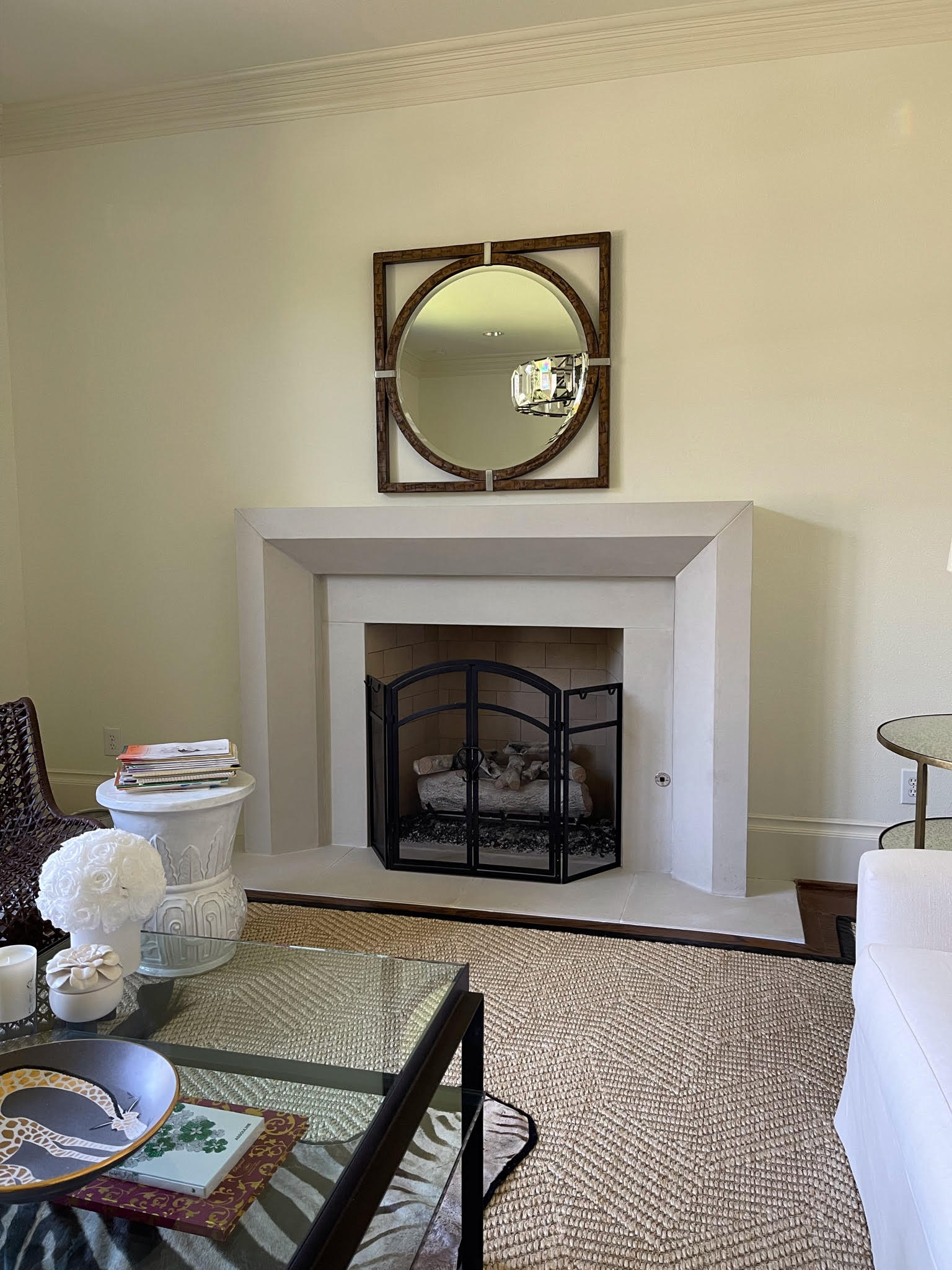
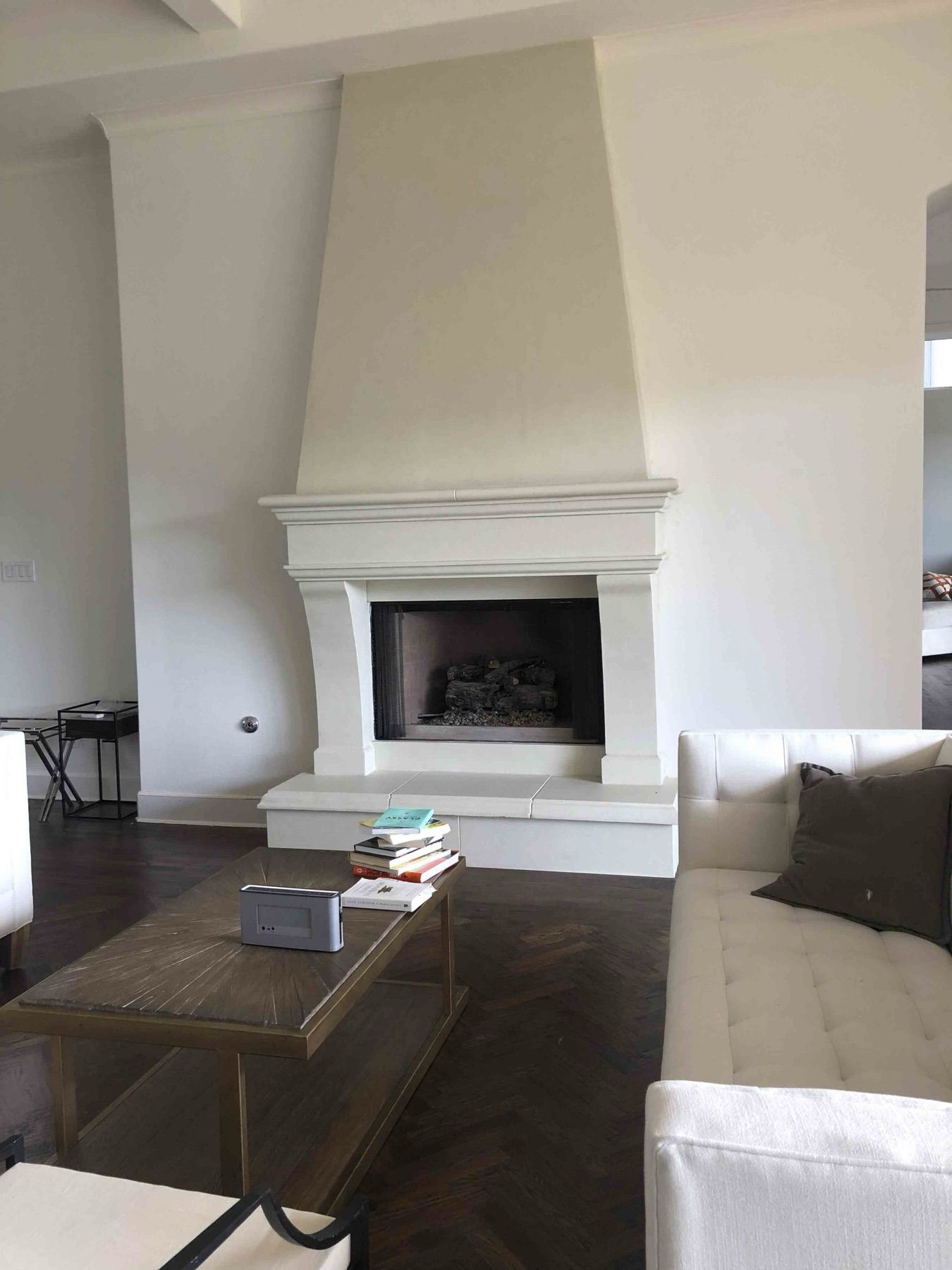
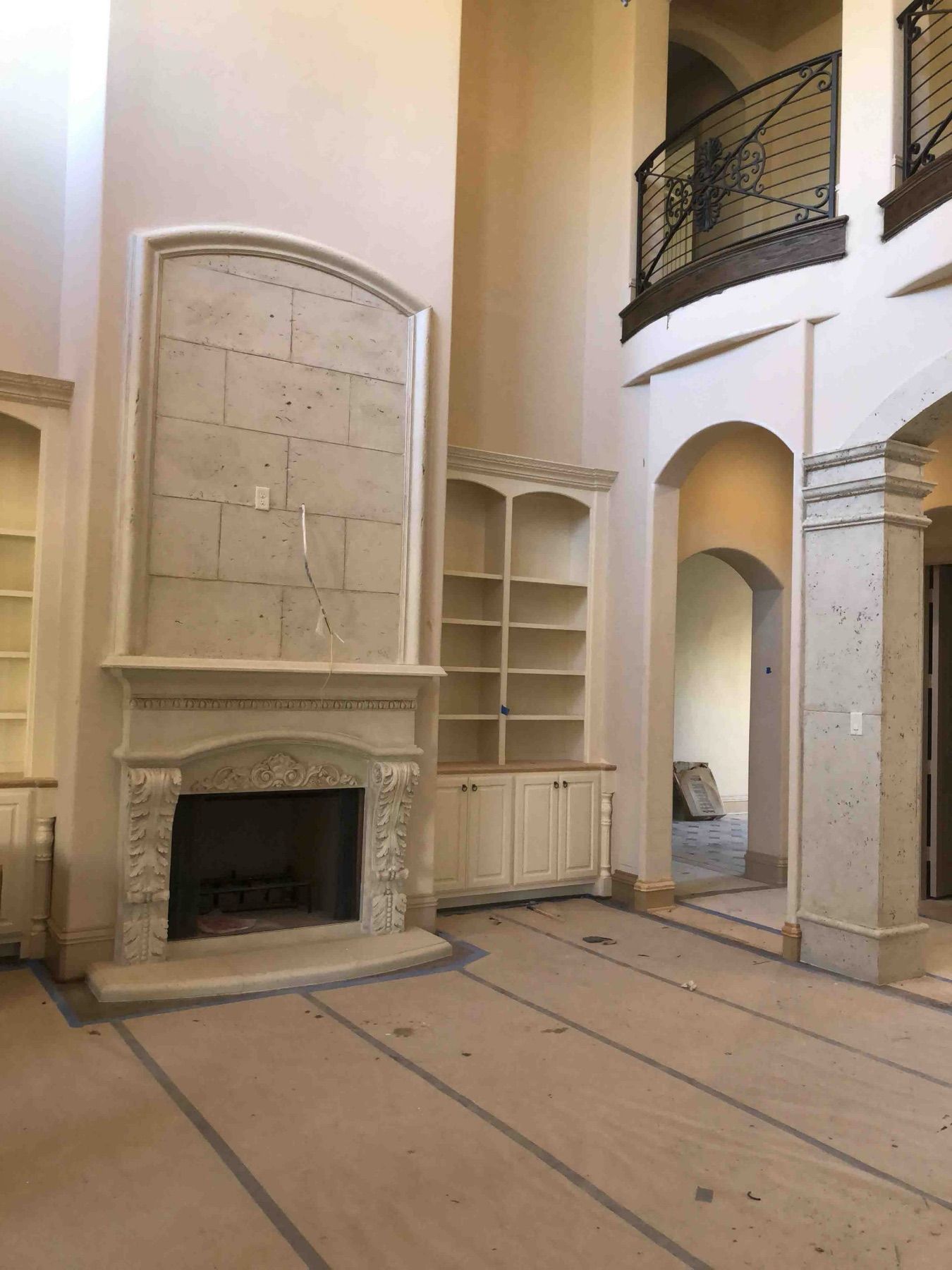
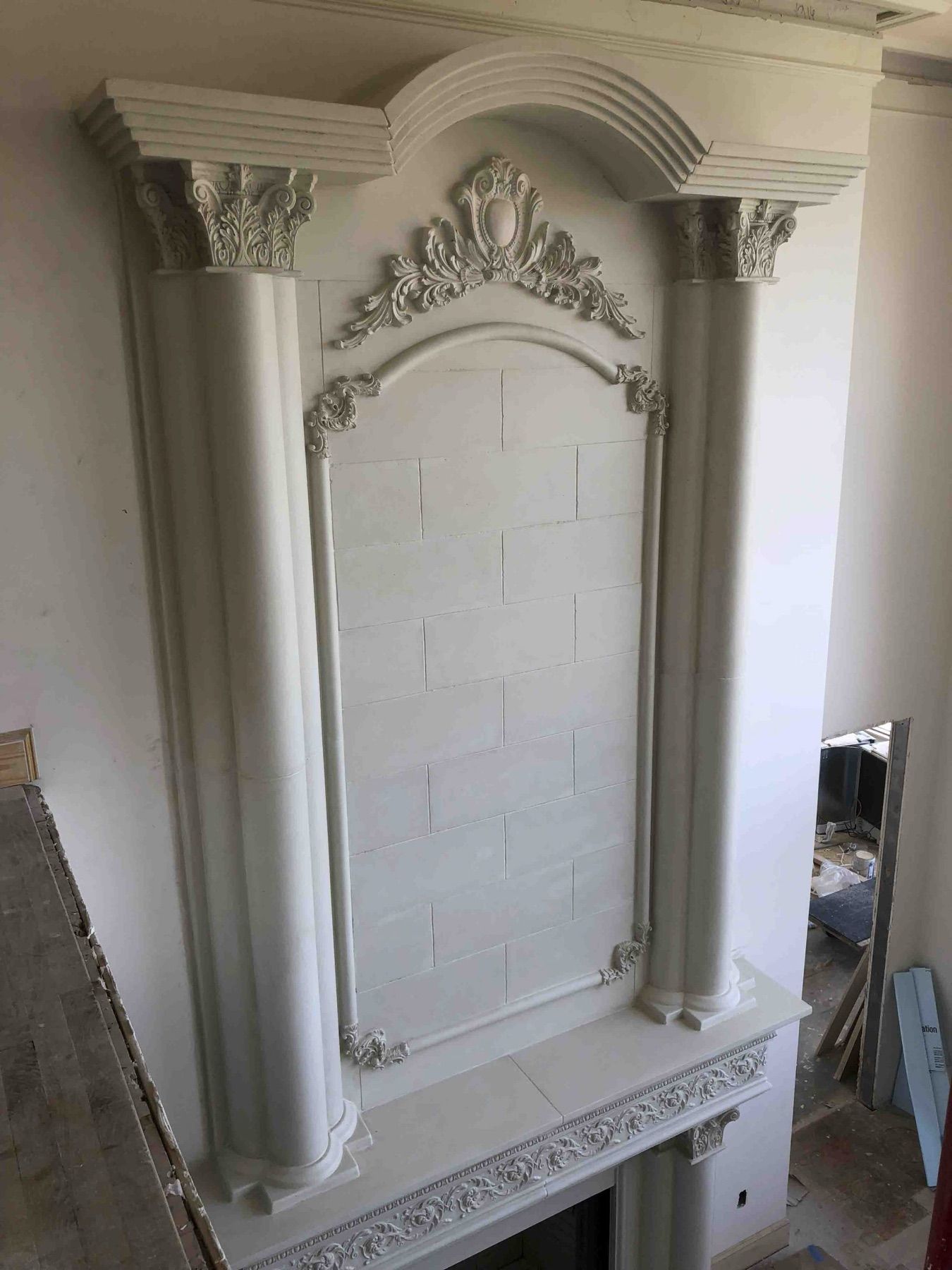
A surround is the larger assembly: the vertical legs (or pilasters) on either side of the firebox, the header or shelf across the top, and sometimes a hearth extension at the base. In other words, a surround includes a mantel shelf as one of its components, but it also frames the entire opening. When a cast stone company talks about a "fireplace surround," they mean the full architectural frame, not just the shelf on top.
This is the more substantial project of the two. Installing a full surround typically means removing whatever currently frames the firebox, whether that's brick, tile, drywall, or an older mantel kit, and replacing it with a single cohesive piece or set of pieces.
Why the Distinction Actually Matters
The terms aren't just vocabulary trivia. They translate directly into scope, cost, and design impact.
Scope of work
A mantel-only project can sometimes be mounted to an existing wall with minimal demolition. A full surround usually requires more prep: removing the old facing material down to the substrate, confirming clearances around the firebox, and installing a frame that meets local and manufacturer fire-clearance requirements.
Visual weight
A floating mantel reads as light and modern, a single horizontal line against whatever material is already on the wall. A full surround reads as architectural and traditional, making the fireplace a true built-in feature rather than an accent. If you want the fireplace to be the anchor of the room, a surround generally delivers that more convincingly than a mantel shelf alone.
Material consistency
With a mantel-only approach, you'll have one material for the shelf and a different material (existing tile, brick, or stone) framing the firebox below it. A full cast stone surround gives you one continuous material and finish across legs, header, and hearth, which tends to look more intentional and tends to age more evenly since everything is exposed to the same conditions.
Which One Is Right for You?
A few questions can help narrow the decision:
Is the material currently framing your firebox in good condition? If the tile or stone below the mantel line is fine, a new mantel shelf alone may be enough.
Do you want the fireplace to be the dominant feature of the room, or a quieter background element? Full surrounds tend to command more visual attention.
Are you working within a renovation budget that limits demolition? A mantel-only swap is typically less invasive and less costly than a full surround replacement.
Is the home's overall style traditional, transitional, or European-influenced? Full cast stone surrounds tend to suit these styles particularly well, since the material has centuries of precedent in exactly this application.
There's no universally right answer. A well-chosen mantel shelf can transform a room on its own, and plenty of homeowners are happy leaving the surrounding material as-is. But if the existing surround material is dated, damaged, or simply mismatched with the rest of the room, replacing the whole assembly, rather than layering a new shelf on top of an old frame, usually produces a cleaner, more finished result.
Why Cast Stone Works for Either Approach
Cast stone is well suited to both scopes. As a standalone mantel shelf, it offers the density and detail of natural stone with more consistent color and lower cost than quarried material. As a full surround, it can be cast as a matched set, meaning the legs, header, and hearth all come from the same batch and finish process, so there's no risk of the mismatched veining or color variation you sometimes get when mixing natural stone pieces sourced at different times.
It also holds up well to the heat cycling that fireplaces put building materials through, which is one of the reasons cast stone has remained a standard choice for both mantels and full surrounds in Dallas-area homes for so long.
Getting the Right Fit
Before ordering anything, measure the full opening, note the depth and height clearances required by your firebox or insert manufacturer, and decide honestly whether the existing surround material is worth keeping. A quick conversation with a cast stone fabricator can also help: they can tell you, based on your firebox and wall condition, whether a mantel-only piece will actually integrate cleanly or whether a full surround is the more practical path. Getting that scope right at the start avoids the more common renovation headache, discovering mid-project that a shelf-only plan needs to expand into a full surround anyway.