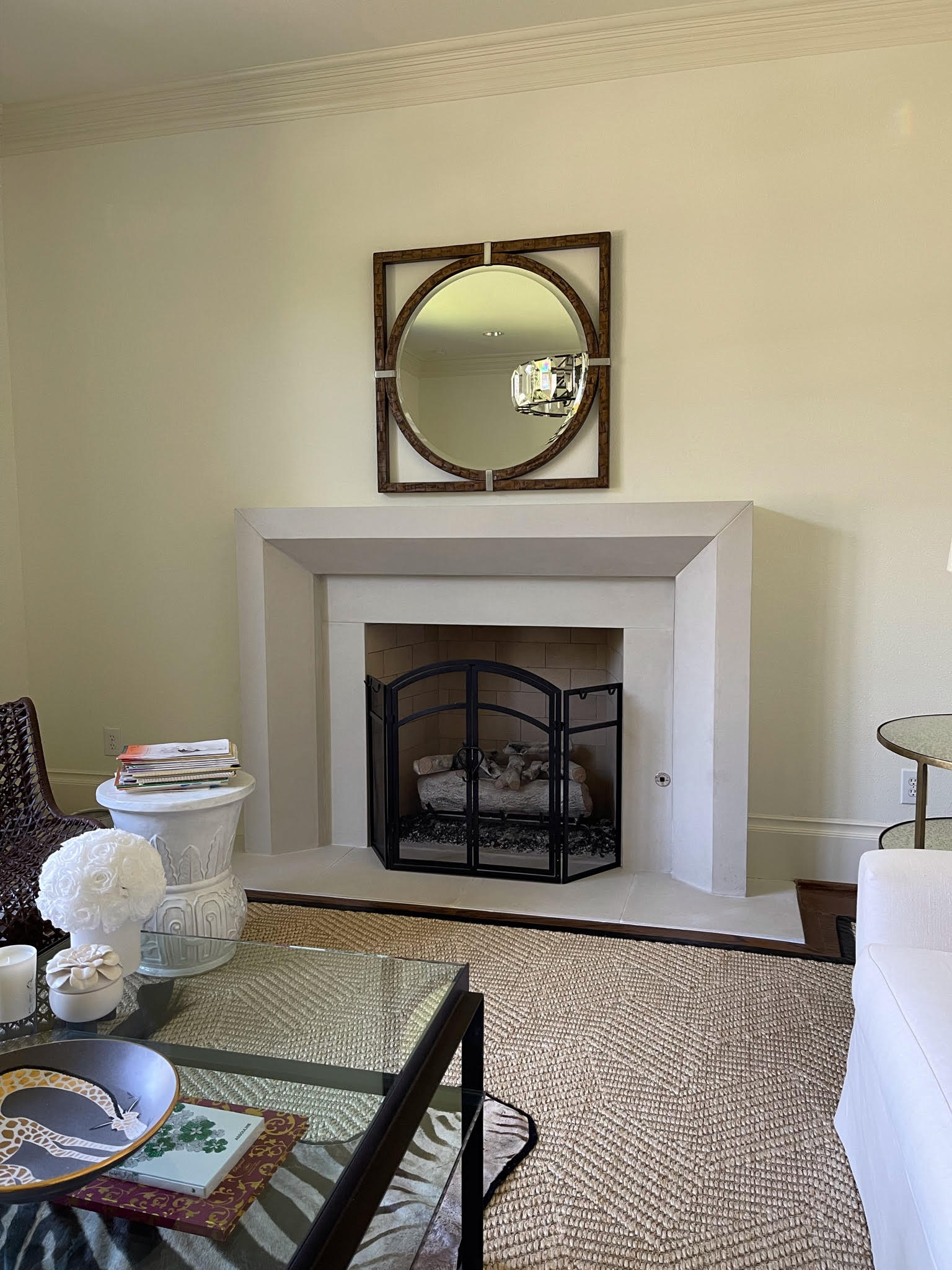
When most homeowners hear "cast stone," they picture a fireplace mantel or a hearth surround. But the same material that makes a striking interior focal point has an even longer history on the outside of buildings. Columns, balustrades, window surrounds, and other exterior architectural details have been cast in stone for centuries, and today's cast stone technology makes these features more accessible than ever for homes and commercial properties alike.
A Quick Refresher: What Makes Cast Stone Different
Cast stone is a manufactured architectural product made from a blend of fine and coarse aggregates, Portland cement, and mineral oxide pigments, poured into detailed molds to replicate the look of hand-carved natural stone. Because it's cast rather than quarried and cut, it can achieve crisp, repeatable detailing and consistent coloring across an entire project, whether that project needs one keystone or twenty matching balusters.
That combination of consistency, durability, and design flexibility is exactly why cast stone has become a go-to material for exterior architectural elements beyond the fireplace.
Columns and Pilasters
Columns were originally structural elements, but in most residential and commercial applications today they serve as design statements, framing an entryway, supporting a porte-cochere, or lining a covered porch. Cast stone columns and pilasters can be produced in classical architectural orders, including Doric, Tuscan, Ionic, Corinthian, and Composite styles, so a homeowner can match a specific historical period or blend details to create a custom look.
Because cast stone columns are manufactured in sections and assembled on site, they're significantly lighter and more cost-effective to install than solid quarried stone columns, while still delivering the visual weight and permanence that a home's facade calls for.
Balustrades and Balcony Details
A balustrade, the railing system made up of a top rail, base rail, and a series of shaped balusters, is one of the most recognizable ways cast stone shows up on porches, balconies, terraces, and rooftop patios. Beyond its safety function, a well-proportioned balustrade adds rhythm and elegance to an elevation, and cast stone allows every baluster in a run to be identical, which is difficult and expensive to achieve with hand-carved natural stone.
Balustrades pair especially well with outdoor living spaces, framing a patio, stair landing, or pool terrace with the same architectural language used elsewhere on the home.
Window and Door Surrounds
Window and door surrounds are one of the simplest ways to add character to a facade without a full exterior renovation. A surround can include sills, jambs, a header, and decorative moulding, and it's often paired with related details like keystones, cornices, and quoins for a more finished, cohesive look.
Sills also serve a practical purpose. A properly detailed cast stone sill sheds water away from the window frame and wall below it, helping protect the structure while adding a refined, traditional silhouette.
Why Homeowners Choose Cast Stone for These Details
A few reasons cast stone consistently wins out over other materials for exterior architectural work:
Consistency: every column, baluster, or sill in a run matches in color and profile, which is hard to guarantee with natural stone.
Durability: cast stone is engineered to withstand freeze-thaw cycles, UV exposure, and Texas heat while holding its detail for decades.
Weight and installation: cast stone pieces are lighter than solid natural stone, which simplifies installation and reduces structural load.
Design flexibility: custom molds make it possible to match an existing historic detail or create an entirely original profile.
Repairability: because cast stone is a type of engineered concrete, minor chips or damage can typically be patched rather than requiring full replacement.
Planning a Project: What to Think About
Match the Architectural Style of the Home
Columns and surrounds read very differently depending on whether a home is traditional, transitional, or contemporary. Working from photos of the home's existing trim, brick coursing, and roofline helps a fabricator recommend proportions and profiles that feel original to the house rather than added on.
Consider Color and Finish as a System
If a home already has cast stone elements, such as a fireplace surround or entry detail, matching color and texture across new columns, balustrades, or window surrounds keeps the exterior feeling intentional and unified rather than mismatched.
Ask About Custom Molds vs. Standard Profiles
Standard architectural profiles are typically more cost-effective and faster to produce, while custom molds allow for a fully bespoke look, useful for replicating a historic detail or achieving a signature design on a larger project.
The Takeaway
Cast stone's reputation as a fireplace material undersells what it can do. Columns, balustrades, window and door surrounds, and related architectural trim all benefit from the same qualities that make a cast stone mantel so popular: consistent detailing, durability, and the ability to be custom designed around a specific home. For anyone planning an exterior renovation or new build in the Dallas area, it's worth considering how these details, cast in the same material as an interior fireplace, can tie a home's design together from the inside out.